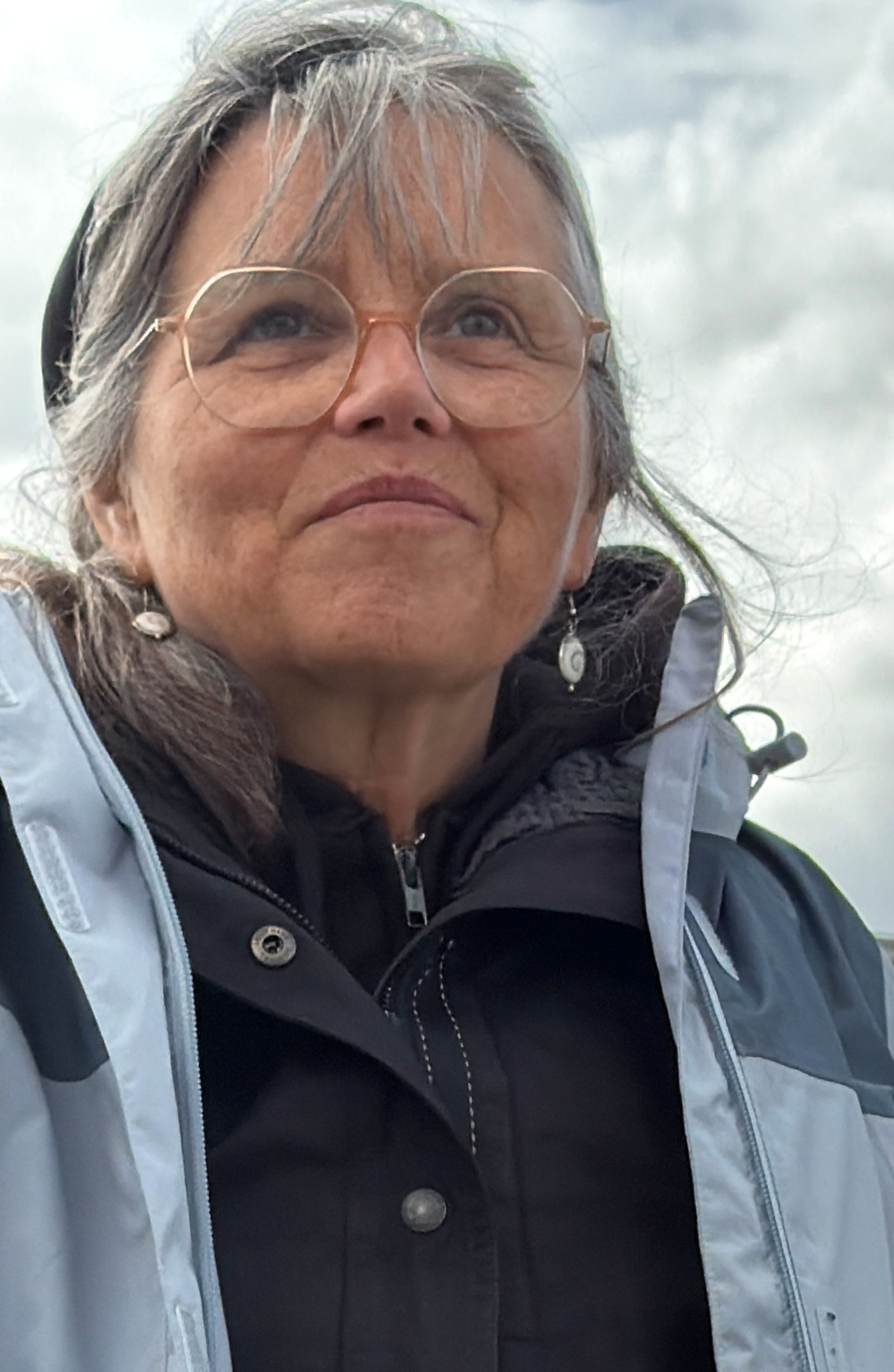
Carol Evans is a Canadian West Coast watercolour artist whose paintings are deeply rooted in the distinctive landscape and atmosphere of British Columbia’s coastal waters. Her work reflects an intimate familiarity with the coast—not simply as scenery, but as a constantly changing environment of water, weather, light, islands and human activity.
For Evans, the Pacific coast provides an extraordinary range of subjects. Quiet coves, working boats, sheltered anchorages, beaches, rocky shorelines and distant islands recur throughout her work, as do the small moments that give coastal life its character: a boat lying at anchor, birds lifting from the water, sunlight breaking across a shoreline, or the changing colour of the sea as weather moves through the landscape. Places such as Smugglers Cove, Pendrell Sound, Fury Cove, Tent Island, Walker Hook and the waters around British Columbia’s islands appear not as generic landscapes, but as places observed with familiarity and affection.
Watercolour is particularly well suited to Evans’s vision. Its transparency allows light to remain an active element of the painting, while washes of pigment can suggest the atmospheric conditions that are so characteristic of the West Coast. Her paintings often depend upon subtle relationships between sky and water, reflected light and shadow, distant land and foreground detail. Rather than treating the landscape as static, she captures the fleeting quality of coastal light and the sense that the scene is continually changing.
A striking feature of Evans’s work is her ability to combine a strong sense of place with an accessible visual language. Her paintings invite the viewer into the landscape. The subject may be a remote coastal inlet or a familiar shoreline, but the experience is one of immersion: the viewer is encouraged to feel the warmth of sunlight, the openness of the water and the quiet of a sheltered bay.
Boats and other traces of human presence are important throughout her work. They provide scale and narrative while connecting the natural landscape with the people who live, travel and work upon these waters. Paintings such as Little Boat at Anchor, Mending Sails, Crab Boat, Eight Taking Flight and Youngest Drummer demonstrate the breadth of Evans’s interest in coastal life. Even when a vessel is the principal subject, it remains part of a larger environment of water, sky and light.
Her paintings also demonstrate a sustained interest in the changing effects of sunlight. Titles such as Dancing Sunlight, Sunbeam, Sun Warmed Shore, Bathing in Light, Sunshine in Smugglers Cove and Daybreak at Tent Islandpoint toward a central concern in her work: the transformation of the landscape by illumination. Evans’s coast is therefore not defined only by geography. It is defined by atmosphere.
Over the course of her career, Evans has developed an extensive body of limited-edition artwork, making her paintings available not only as original works but through carefully produced editions on archival watercolour paper and canvas. The range of edition sizes and formats reflects a sustained commitment to bringing her interpretation of the West Coast into homes and collections while retaining the character and luminosity of the original paintings.
Her catalogue encompasses intimate small-format works as well as large-scale coastal compositions. Some paintings are particularly panoramic, emphasizing the immense horizontal sweep of the Pacific landscape, while others concentrate on a single vessel, bird, shoreline or moment of reflected light. This variety allows Evans to explore both the grandeur and intimacy of the coast.
What ultimately unifies the work is a profound sense of place. Carol Evans’s paintings celebrate the British Columbia coast as a landscape of light, water and memory—a place experienced through movement, weather and changing seasons as much as through its physical geography. Her work records the West Coast not merely as it looks, but as it feels to encounter it: quietly, intimately and often unexpectedly illuminated.
